
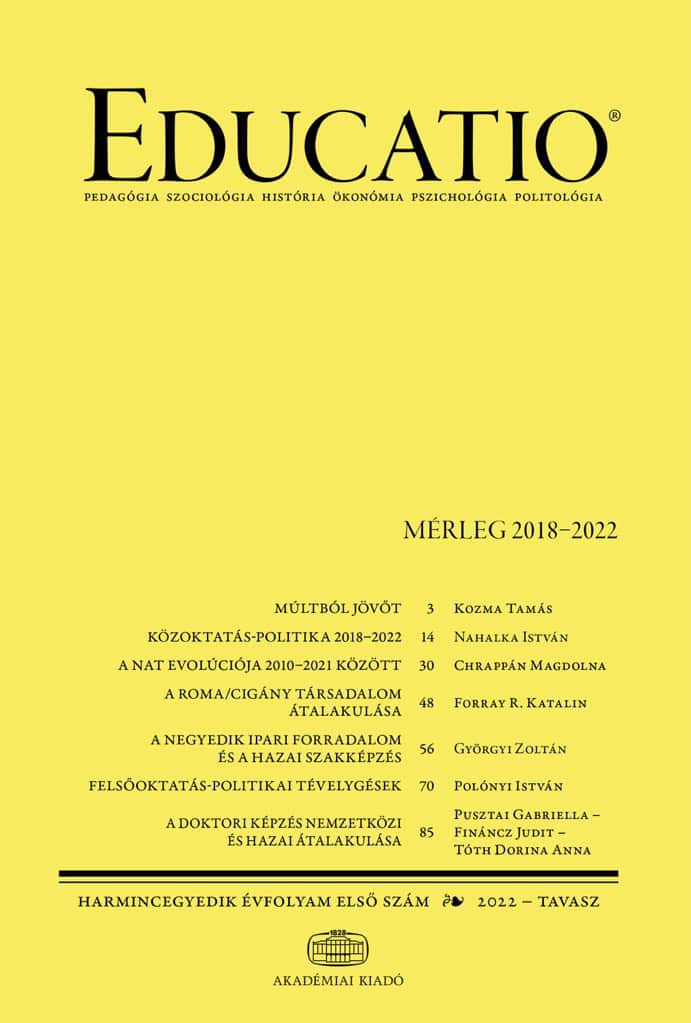
A landmark assessment of Hungarian adult learning – from PIAAC evidence to policy action
In her article “From PIAAC to Policy: Insights and Prospects for Hungarian Adult Learning Policy”, Dr habil. Éva Farkas provides a rare combination of rigorous diagnosis and actionable direction. The paper is a landmark, evidence-based overview of where Hungarian adult learning stands today—and why educational renewal is no longer optional.
A central warning signal is the deterioration in PIAAC results. The study highlights that a substantial share of Hungarian adults do not reach the minimum levels of basic information-processing skills (literacy, numeracy, adaptive problem solving) needed for labour market participation and full social inclusion. The paper reports that in Hungary (2022/2023):
- 32.5% performed at Level 1 or below in literacy—roughly 2 million adults.
- 28.8% were at Level 1 or below in numeracy—about 1.8 million adults.
- 37.2% were at Level 1 or below in adaptive problem solving—around 2.3 million adults.
- Alarmingly, 22% of adults (approx. 1.4 million people) scored low across all three domains.
These are not abstract education statistics. They translate into major employability constraints and have direct consequences for productivity, innovation capacity and competitiveness. The article discusses how adult skills and their allocation explain a significant share of productivity differences across OECD countries, and how improvements in skills can generate sizeable productivity gains—especially in lagging economies.
Importantly, the paper goes beyond diagnosis. It lays out the foundations for a reform-oriented policy programme, calling for:
- complex, target-group-specific adult learning programmes,
- professionalisation, modernisation of teacher education, and
- a comprehensive, research-based national skills strategy integrating education and labour market considerations.
This is why the article matters for Profadul’s mission: it strengthens the case that adult educator professionalisation, quality improvement and basic skills development require urgent, coordinated action—and that robust reforms must be grounded in evidence, stakeholder cooperation and coherent system design.
Why Profadul shares this
For Profadul, this analysis reinforces a key message: professionalisation, quality and basic skills development cannot be postponed—and meaningful progress requires stakeholder cooperation, transparent quality frameworks and accessible learning pathways.


